
Developing the next generation of SEND leadership across Anglian Learning

When the National Professional Qualification (NPQ) for SENCOs was launched, Anglian Learning recognised an opportunity not only to develop individual practitioners, but also to strengthen SEND leadership across the Trust.
As a multi-academy trust with 22 schools across Cambridgeshire, Essex and Suffolk, Anglian Learning wanted to ensure its SEND workforce was equipped with the latest knowledge, strategic leadership skills and professional networks needed to support pupils with additional needs. Working with Cambridgeshire & Peterborough Teaching School Hub (CPTSH), the Trust established a dedicated NPQ for SENCOs cohort, bringing together colleagues from across its primary, secondary and 16-19 schools.
For Lucy Millard, Trust Specialist SEND Lead at Anglian Learning who has completed the NPQ for SENCO herself, the programme aligned closely with the Trust’s wider ambitions.
“Two years ago, when the NPQ SENCO was launched, we were quite keen as a Trust to have a cohort go through the new process,” Lucy said. “The DfE provided funding for that, which was also one of the reasons we wanted to do the NPQ.
“Part of my Trust-wide role is thinking about succession planning across Anglian Learning but also making sure that the staff in our schools have the most up-to-date knowledge around all the statutory requirements they need as SENCOs.”
Creating a Trust-wide cohort
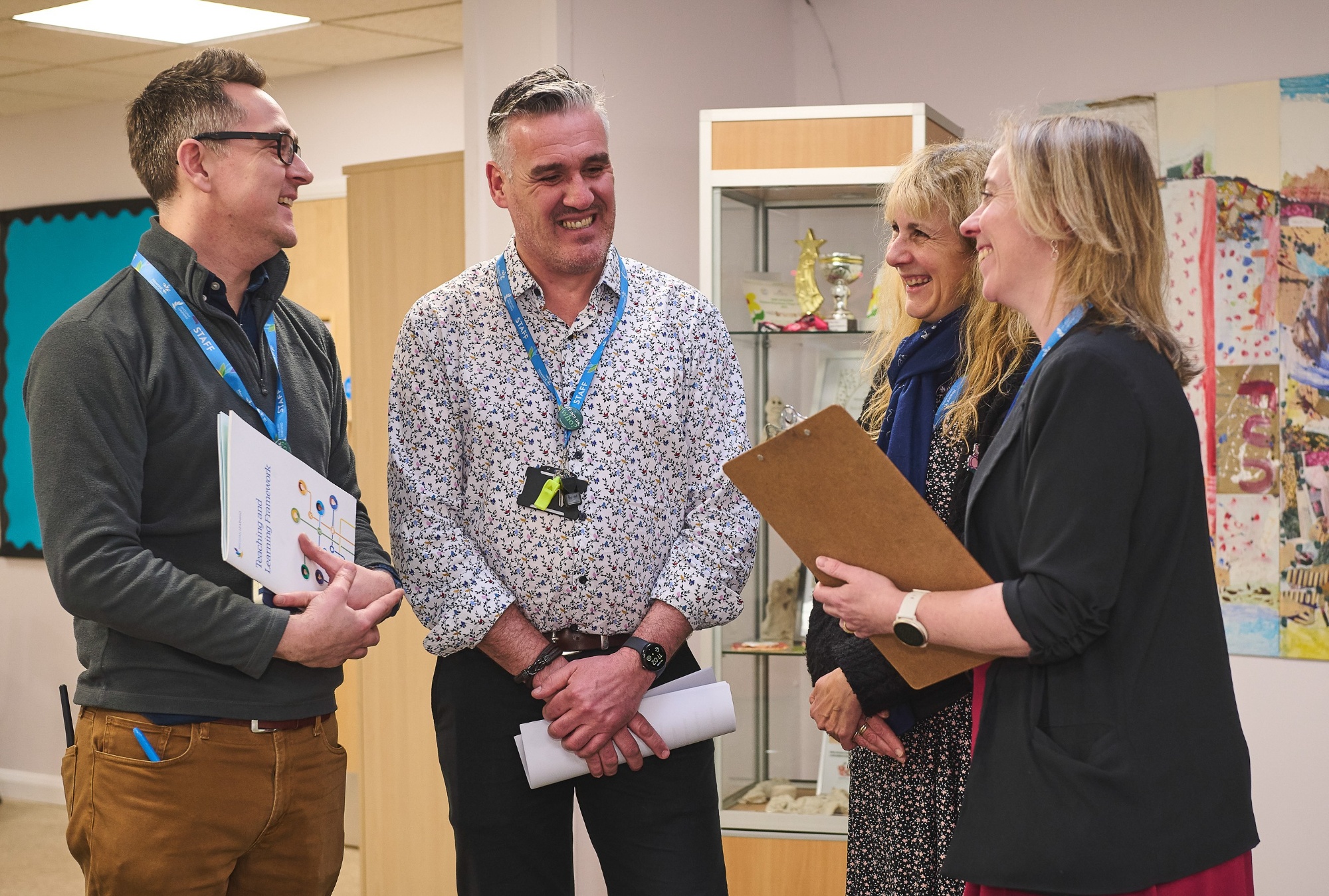
The first cohort on the CPTSH-led programme brought together colleagues from across Anglian Learning. Participants represented a broad range of roles and experience, reflecting the wider accessibility of the NPQ for SENCOs.
“We’ve had 14 members of staff go through the programme as a specific Anglian Learning cohort,” Lucy explained. “The NPQ is the qualification for SENCOs, but the DfE has marketed it as a qualification for anyone working in a strategic SEND role. Unlike the previous Nasen qualification, which was very much for SENCOs to complete, the NPQ is open to people without qualified teacher status. For example, if you’ve got a Higher Level Teaching Assistant working in an Assistant SENCO role, they have been able to do the course."
“Out of our participants, we had a real mix of current SENCOs who hadn’t completed the qualification yet because they were waiting for the switchover; senior leaders who wanted more of a strategic SEND overview; Higher Level Teaching Assistants with an Assistant SENCO role; and aspiring SENCOs who want to move into those positions when opportunities arise.”
The benefits extended beyond individual professional development. Bringing colleagues together as a Trust cohort helped establish a network of future SEND leaders who could learn from one another throughout the programme and beyond.
Lucy added: “What’s been really nice is that, because it’s been a cohort made up entirely of Anglian Learning staff, we’ve been able to build a network around it. We’ve developed a really strong group that has grown together as the next generation of our SEND workforce.”
Turning learning into practice
One of the key advantages of the Trust-wide approach was the ability to connect NPQ learning directly to day-to-day practice across Anglian Learning schools.
As the central link between schools, Lucy was able to reinforce programme content through Trust-wide discussions and implementation work.
“One example is the graduated approach,” she shared. “The NPQ includes a generic unit on the graduated approach and the statutory guidance around it. We’ve adopted our own Anglian Learning graduated approach, so we’re able to talk about how that statutory guidance becomes something real and lived within our Trust.
“I’m able to have those conversations because I know the information participants have received and how it aligns with the way we do things in Anglian Learning.”
This alignment between professional learning and organisational practice helped ensure that knowledge gained through the programme translated into meaningful improvement within schools.
Learning beyond the classroom
A particularly valuable aspect of the programme was the opportunity to visit schools and specialist provisions outside of Anglian Learning.
“One standout element was going to see different schools at Meridian Trust,” Lucy said. “We visited Martin Bacon Academy, which is a specialist provision, and The Link, a new 40-place satellite of The Martin Bacon Academy Specialist Provision situated within the grounds of Swavesey Village College.
“These visits gave participants protected time to observe practice, ask questions and reflect on what could be adapted within their own settings. It’s always valuable to have ring-fenced time to visit another school, and the NPQ creates that opportunity. You’re not rushing around trying to fit it in; it’s organised, and you can really focus on learning.”
The impact of these visits was immediate and practical. One delegate drew inspiration from approaches used in specialist provision while establishing a support base within her own school.
Lucy continued: “Many people reflected on the complexity of the needs they saw during the visits. Although we’re mainstream schools at Anglian Learning, participants came away asking: what practices can we adapt for our own settings? One example came from a delegate who is currently setting up a support base within her school. She was particularly inspired by the way children’s targets were displayed in child-friendly language, including not just Maths and English targets, but social, emotional and personal targets too. She took that idea back to her school. When I visited the support classroom, I saw how she had implemented it. It clearly showed children what they were working towards and gave staff a shared understanding of each child’s goals.”
Expertise that resonates
For Lucy, the quality of facilitation was another significant strength of the NPQ for SENCOs: “It’s been great. Meridian Trust is very highly regarded in the area, and the level of expertise they bring has been brilliant.”
The blend of mainstream and specialist expertise proved particularly valuable for a Trust operating predominantly in mainstream settings. She said: “They have knowledge from both mainstream and specialist settings, which is particularly valuable. Our Trust is entirely mainstream, although we do have some enhanced provision. We don’t have specialist schools, so that wider perspective has been really useful.”
Equally important was the credibility facilitators brought through their own current leadership roles. “The other thing that’s valuable is that the facilitators live and breathe the job,” Lucy revealed. “They’re not delivering training from a textbook. They’re doing the work themselves. Hearing lived experiences and practical examples from people currently doing the job has been one of the most useful aspects of the programme.”
Developing future SEND leaders
A major benefit for Anglian Learning has been the role the programme has played in succession planning and leadership development.
“I feel quite privileged that we completed it as a Trust cohort because there have already been practical benefits,” Lucy explained. “We’ve had vacancies arise within the Trust, and I know exactly who has completed the NPQ and who may be ready to take on a SENCO role.”
The programme has already helped support career progression within the Trust. “One participant has now moved into a SENCO position within their school, while another has moved into a different school within the Trust,” she said. “That’s been a real strength.”
Alongside formal qualifications – and the statutory requirement to have qualified SENDCOs in every school – the relationships developed through the cohort have created a valuable support network that continues beyond the programme.
Lucy commented: “The time we’ve spent together has strengthened relationships across the Trust. With 22 schools, some staff members would never normally meet one another. This has given them opportunities to network and build meaningful professional connections. When they become SENCOs, they already have peers and colleagues who have been on the same journey. They have people they can call or email for support. It’s difficult to quantify, but I know SENCOs are regularly contacting one another for advice and support.”
Supporting inclusion and system leadership
As schools continue to respond to evolving SEND policy and inclusion priorities, Lucy believes the NPQ for SENCOs provides more than technical knowledge. It develops the leadership mindset needed to navigate change effectively.
One of the strongest themes participants took away was the importance of reflection and curiosity. Lucy summarised: “My advice would be to really take the opportunity to listen to other people's SEND contexts and reflect on what you hear about their experiences, challenges and strengths. We're often quite good at talking about the things we do well in our own schools and trusts, but really listening to other perspectives is a huge benefit. I’d also encourage people to go in with an open mindset and ask: ‘How can we be better? How can we improve? How can we strengthen our SEND provision?’
“Another theme that came through repeatedly was curiosity. We’re encouraged to remain curious about whether what we're doing is right. We want to be evidence-informed and reflective. I think continually being curious about SEND, what we are trying to achieve as a Trust, and whether it’s both manageable and morally right is really important.”
The emphasis on strategic leadership also resonated strongly through the programme. “We know the day-to-day role can be very paperwork-heavy, but a lot of emphasis was placed on strategic leadership,” she detailed. “If those strategic elements are strong, they should reduce some of the wider workload pressures.”
“The same applies to implementing reforms like the White Paper. It’s not about rushing into quick wins. It’s about planning, reflecting, using evidence and learning from other trusts through networking. That’s one of the strongest messages from the NPQ. It develops the strategic thinking skills that help you reflect on what policy changes mean for your own Trust.”
Looking ahead
For Anglian Learning, the impact of the programme is already evident in strengthened expertise, increased collaboration and a growing pipeline of SEND leaders.
“Everyone I’ve spoken to has enjoyed the training, and everyone completed the programme, which is always a good sign – it’s been a really positive experience,” Lucy emphasised.
The Trust’s commitment to the NPQ for SENCOs continues, with a further cohort already underway and another being recruited for November 2026.
Reflecting on the journey so far, Lucy sees the programme as an important investment in both current and future SEND provision across the Trust.
“I feel we’ve built a strong SEND team, both in place now and coming through for the future, and that’s really encouraging,” Lucy concluded.
Case study developed: July 2026